
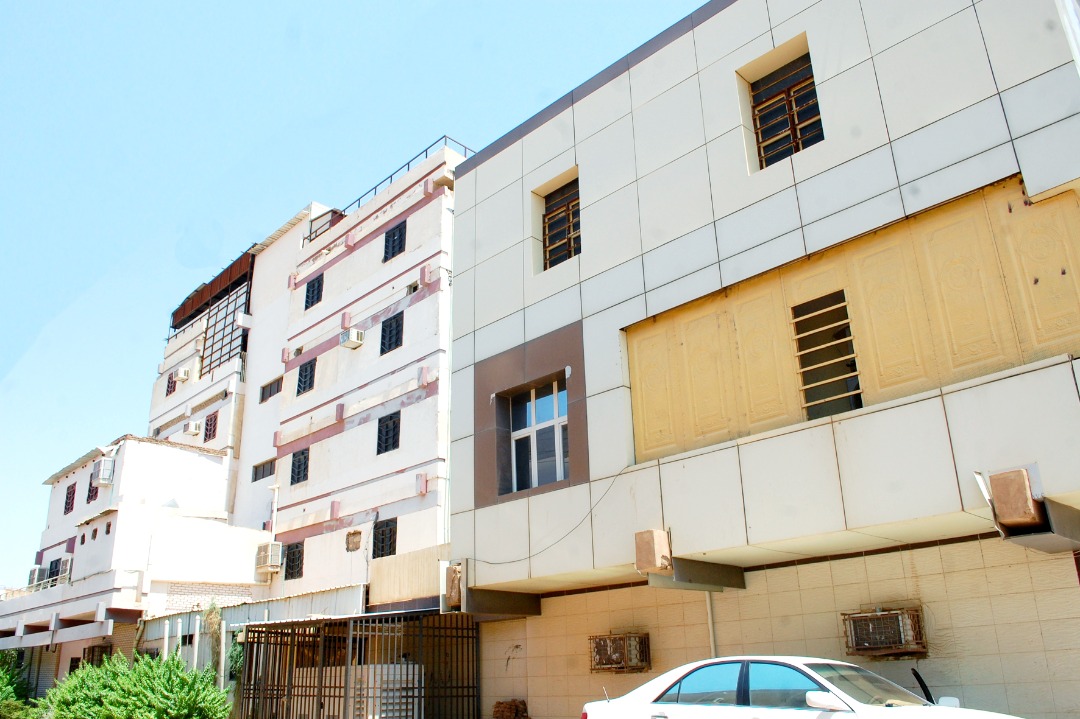
As part of the Arab Organization for Agricultural Development’s (AOAD) strategic agenda to strengthen institutional collaboration and promote knowledge-driven agricultural transformation, Professor Ibrahim El-Dukheri, Director General of AOAD, undertook a high-level official visit to Dar El Oloum College for Science and Technology. The visit forms part of the Organization’s broader commitment to establishing robust partnerships with institutions of higher education and scientific research to enhance research excellence, innovation ecosystems, and evidence-based development across Sudan and the wider Arab region.
Upon his arrival, Professor El-Dukheri was received by Professor Omar Mohamed Altoum, Chairman of the Board of Trustees, together with Professor Ibrahim Mohamed Adam, Dean of the College, in the presence of the College Principal and the Secretary of Academic Affairs. The College leadership extended a warm welcome to the Director General, emphasizing that the visit represents a significant milestone in deepening institutional cooperation and reaffirming the shared commitment of both institutions to harness scientific research as a strategic catalyst for agricultural modernization, sustainable development, and socio-economic transformation.
During the discussions, Professor El-Dukheri underscored that AOAD’s resumption of its operations from its permanent headquarters in the Republic of Sudan reflects the Organization’s unwavering commitment to fulfilling its developmental mandate from its historical seat. He emphasized that Sudan’s exceptional comparative advantages—including its vast arable land resources, abundant water endowments, favorable agroecological diversity, and substantial human capital—position the country to become a regional engine of agricultural transformation and a strategic pillar in strengthening Arab food security. He further stressed that realizing this potential requires the integration of scientific research, technological innovation, policy coherence, institutional capacity development, and strategic investment to build resilient and sustainable agri-food systems capable of responding to emerging regional and global challenges.
Professor Omar Mohamed Altoum, Chairman of the Board of Trustees, commended AOAD’s distinguished leadership in advancing agricultural and rural development throughout the Arab region. He reaffirmed the College’s strategic commitment to positioning scientific research and innovation at the core of its institutional mission, highlighting its sustained efforts to promote high-quality scholarly outputs through its peer-reviewed scientific journal. He also expressed his appreciation for Professor El-Dukheri’s role as Chairman of the Journal’s Editorial Board, noting that his distinguished academic leadership has significantly enhanced the journal’s scientific credibility, editorial standards, and regional academic standing.
In the same context, Professor Ibrahim Mohamed Adam, Dean of the College, delivered a comprehensive presentation outlining the College’s newly adopted five-year Strategic Research and Innovation Agenda, which constitutes a fundamental pillar of its recently approved institutional five-year strategic plan. The framework establishes a multidisciplinary and impact-oriented research architecture designed to strengthen research governance, foster interdisciplinary collaboration, expand strategic partnerships, enhance research productivity, and align scientific outputs with national development priorities and the Sustainable Development Goals (SDGs). The Dean further indicated that implementation of several flagship research programmes and institutional initiatives has already commenced, with particular emphasis on translating scientific knowledge into practical solutions that address pressing agricultural, environmental, economic, and societal challenges.
The visit concluded with a shared commitment to institutionalize long-term collaboration through structured research partnerships, joint scientific programmes, collaborative capacity-building initiatives, and knowledge exchange platforms. Both institutions reaffirmed their determination to leverage their complementary comparative advantages to accelerate agricultural innovation, strengthen research excellence, support evidence-informed policymaking, and contribute to the realization of sustainable agricultural development and enhanced food security in Sudan and across the Arab region.