
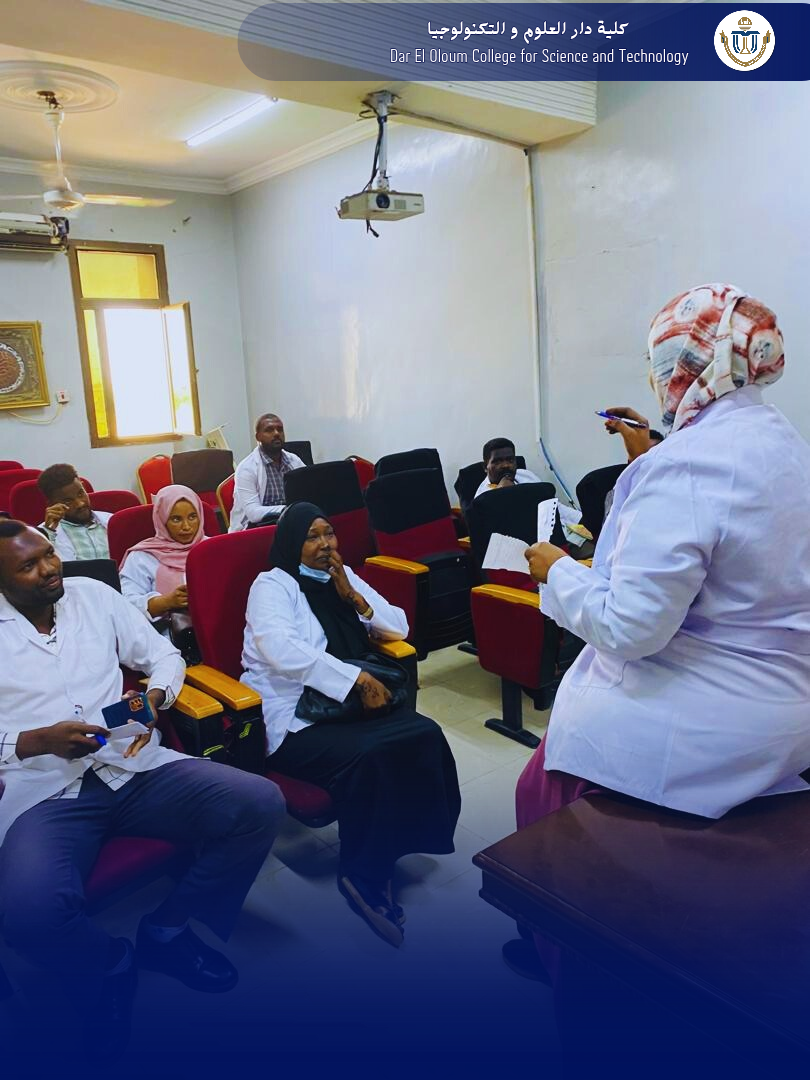
The Sudanese Medical Council has officially accredited the first batch of graduates from the Bachelor of Medicine and Surgery (MBBS) program at Dar El Oloum College for Science and Technology. This accreditation qualifies the graduates to become a genuine addition to the medical workforce in Sudan and abroad, following many years of rigorous study and training in some of the best hospitals inside and outside Sudan, foremost among them the General Military Hospital (Medical Corps).
The College has also benefited from its affiliated teaching staff, who are simultaneously members of the faculty at several prestigious universities, including the University of Khartoum, University of Bahri, Bakht Al-Ruda University, Karary University, Dongola University, Al-Neelain University, and Omdurman Islamic University, among others.
Professor Omar Mohamed Al-Toum, Chairman of the College’s Board of Trustees, praised the College administration—represented by the Deanship, the Secretariat of Academic Affairs, the Vice Dean, the Coordinator of the Medicine and Surgery Program, other academic programs, faculty members, and administrative staff—for the tremendous efforts they exerted, which culminated in this achievement. He noted that this milestone follows the previous accreditation of the College’s graduates in the Medical Laboratory Sciences program, as well as their eligibility to sit for the Legal Profession Regulation Examination.
He added that this achievement was realized as a result of the College’s strong commitment to comprehensive quality assurance, for which a dedicated department was established and headed by a leading expert in educational quality, evaluation, and accreditation: the educational expert Professor Al-Tayeb Abdelwahab Mohamed Mustafa, former Vice-Chancellor of Bakht Al-Ruda University.
Regarding tuition fees, Professor Al-Toum explained that the College is considered one of the most affordable higher education institutions, despite being a private college. This is because its founders and administrators are originally members of university faculty and higher education institutions, and they place community service at the core of their mission. He also extended sincere thanks to the Sudanese Medical Council, the Medical Professions Council, and the Council for Regulating the Legal Profession for their efforts in evaluating and accrediting graduates.
For his part, Professor Ibrahim Mohamed Adam, Dean of the College, stated that despite the challenges posed by the war, and by the grace of God, the College was able to enable students to continue their studies and examinations at various centers inside and outside Sudan. He added that academic activities resumed after a suspension of only three months following the outbreak of the war, at the College’s temporary campus at Bakht Al-Ruda University in Ad-Dueim.
He expressed his gratitude to Professor Moataz Bakri Ahmed Sayed Ahmed, Vice-Chancellor of Bakht Al-Ruda University, who opened the doors of his university to institutions affected by the war as part of the university’s national responsibility. He highlighted that Professor Moataz remained steadfast at his university throughout the war and did not leave except for compelling reasons. Professor Ibrahim further noted that Dar El Oloum College for Science and Technology adopts fourth-generation university programs, which emphasize applied and practical aspects, even within humanities faculties, by training students in relevant institutions before and after graduation.
Dr. Mohamed Adam Manfal, Secretary of Academic Affairs, stated that despite the war conditions, the College committed itself to continuing its mission by integrating face-to-face lectures with e-learning across all its academic programs. These programs include Medicine and Surgery, Medical Laboratory Sciences, Nursing Sciences, Administrative Sciences, Information Technology, Law, Economics, and Banking Studies.
He added that the College provided comprehensive practical training for all students in these programs at leading hospitals and medical centers inside and outside Sudan, under the direct supervision and evaluation of the Sudanese Medical Council and other specialized councils in all examinations. As a result, the College’s graduates achieved top scores in national competitive qualifying examinations, including the Legal Profession Regulation Examination.